
Three names, three different games: how Tales of Eternia, its North American title Tales of Destiny II, and the PS2's Tales of Destiny 2 differ.
Tales of Destiny 2 vs Tales of Eternia: Three Names, Three Different Games
Two of the three names belong to one game. Tales of Eternia is the PlayStation RPG Namco released in Japan in November 2000, and Tales of Destiny II was that same game retitled for North America in September 2001; the numeral is the only difference. Tales of Destiny 2, with a digit, is a separate PlayStation 2 game from 2002, a sequel to 1997's Tales of Destiny that never reached the West. The October 2026 release is Tales of Eternia Remastered in every region, North America included.
- Tales of Eternia and Tales of Destiny II are one game, different region, different box.
- Tales of Destiny 2 is the other game: different lead, different world, no English version.
- The Roman numeral is the tell. II is Eternia. 2 is the PlayStation 2 sequel.
- The remaster uses the Eternia name worldwide, so a listing calling it Tales of Destiny II means the 2001 disc.
The Three Names Side by Side
| Name as printed | What it actually is | Platform | Where and when | Link to the 2026 remaster |
|---|---|---|---|---|
| Tales of Eternia | Third mainline Tales game, by members of Telenet Japan's Wolfteam | PlayStation | Japan, November 30, 2000 | The game this remaster rebuilds |
| Tales of Destiny II | The same game, retitled by Namco | PlayStation | North America, September 2001 | Same disc; the numeral existed only there |
| Tales of Eternia | Handheld port, same name | PlayStation Portable | Japan, March 3, 2005; Australia, February 9, 2006; Europe, February 10, 2006; not North America | Reviewers say the remaster is based on it |
| Tales of Destiny 2 | Different game: the first direct sequel, set eighteen years after Tales of Destiny | PlayStation 2 | Japan, November 28, 2002, with an Asian release by Sony Computer Entertainment; not the West | Unrelated |
| Tales of Destiny 2 | Handheld port of that sequel, by Alfa System | PlayStation Portable | Japan, February 2007, with Asian versions later in 2007; not the West | Unrelated |
| Tales of Eternia Remastered | The 2026 remaster | PS5, PS4, Xbox Series X|S, Switch, Switch 2, PC | Consoles October 15, 2026; Steam October 16, 2026 | This site's game |
Those first five rows are original-release history, not remaster data; dates come from the Wikipedia articles on Tales of Eternia and Tales of Destiny 2. One disagreement: Wikipedia dates the North American release to September 18, 2001, HowLongToBeat's field to September 10.
The Roman Numeral Is the Whole Trick
II is the 2001 North American title of the 2000 game, the one this site covers. 2, the digit, is the 2002 PlayStation 2 title. The numbering contradicts both: Eternia is the third mainline entry but shipped in North America wearing a II, while the fourth, Tales of Destiny 2, carries no Western number because it never had a Western release.
The North American title promises a link that does not exist. Eternia is not a follow-up to Tales of Destiny; it has its own cast, world and story, and Wikipedia states plainly that it is a different game from the PlayStation 2's Tales of Destiny 2. The sequel the "II" seemed to announce is the one nobody outside Asia can buy; the beginner guide starts on the one they can.
Why North America Got a Different Name
The rename is usually explained as a trademark dodge. That is not the explanation on record. The creators gave their own reason, quoted on Wikipedia:
"the game's creators stated it was done strictly for brand name and brand recognition reasons; Tales of Destiny was the first of the Tales game to be released in North America, and they wanted to draw a clear connection between the two games."
Tales of Phantasia shipped in Japan in 1995 but did not reach North America until its Game Boy Advance port in 2006, so for most of a decade the first Tales game a North American player could buy was Tales of Destiny. Naming the third game Destiny II made it look like a continuation of that one.
The trademark version is the other story you will see: that "Eternia" was avoided because Mattel held the word for the Masters of the Universe toyline in North America, which Wikipedia records as outside speculation rather than the documented reason.
Store listings and wikis flatten these two titles constantly. If a page says "Tales of Destiny 2" and then mentions Kyle, Reala, Stahn or Rutee, it means the PlayStation 2 game that never reached the West. If it mentions Reid, Farah, Keele or Meredy, it means this one.
What the PlayStation 2's Tales of Destiny 2 Actually Is
| Detail | Tales of Destiny 2 (2002) |
|---|---|
| Developer | Telenet Japan and Wolf Team; the PSP port by Alfa System |
| Platforms | PlayStation 2, Japan, November 28, 2002, with an Asian release published by Sony Computer Entertainment; PSP port in Japan, February 2007 |
| Western release | None, for either version |
| Story | Eighteen years after Tales of Destiny, following Kyle Dunamis |
| Sales | 977,000 copies shipped worldwide as of December 2007, per Wikipedia |
The overlap that causes the mix-ups is more than a name: both games had their character art handled by Mutsumi Inomata and their music by Motoi Sakuraba and Shinji Tamura, and both came out of the same studio lineage within two years of each other. The clean separation is the cast: Eternia's party is Reid, Farah, Keele, Meredy, Chat and Max, while the PS2 game follows Kyle.
Which One Is the 2026 Remaster?
The remaster is the Eternia side of that list, and Bandai Namco titled it accordingly for every region.
Official source: Tales of Eternia Remastered | Official Site
The official site names the game Tales of Eternia Remastered, lists all six platforms and mentions no Destiny title on the page. The Steam store page carries the same name and dates the release to October 16, 2026, one day after the consoles on October 15. The character names, the Inferia and Celestia structure and the Aggressive Linear Motion Battle System in the official copy are all Eternia.
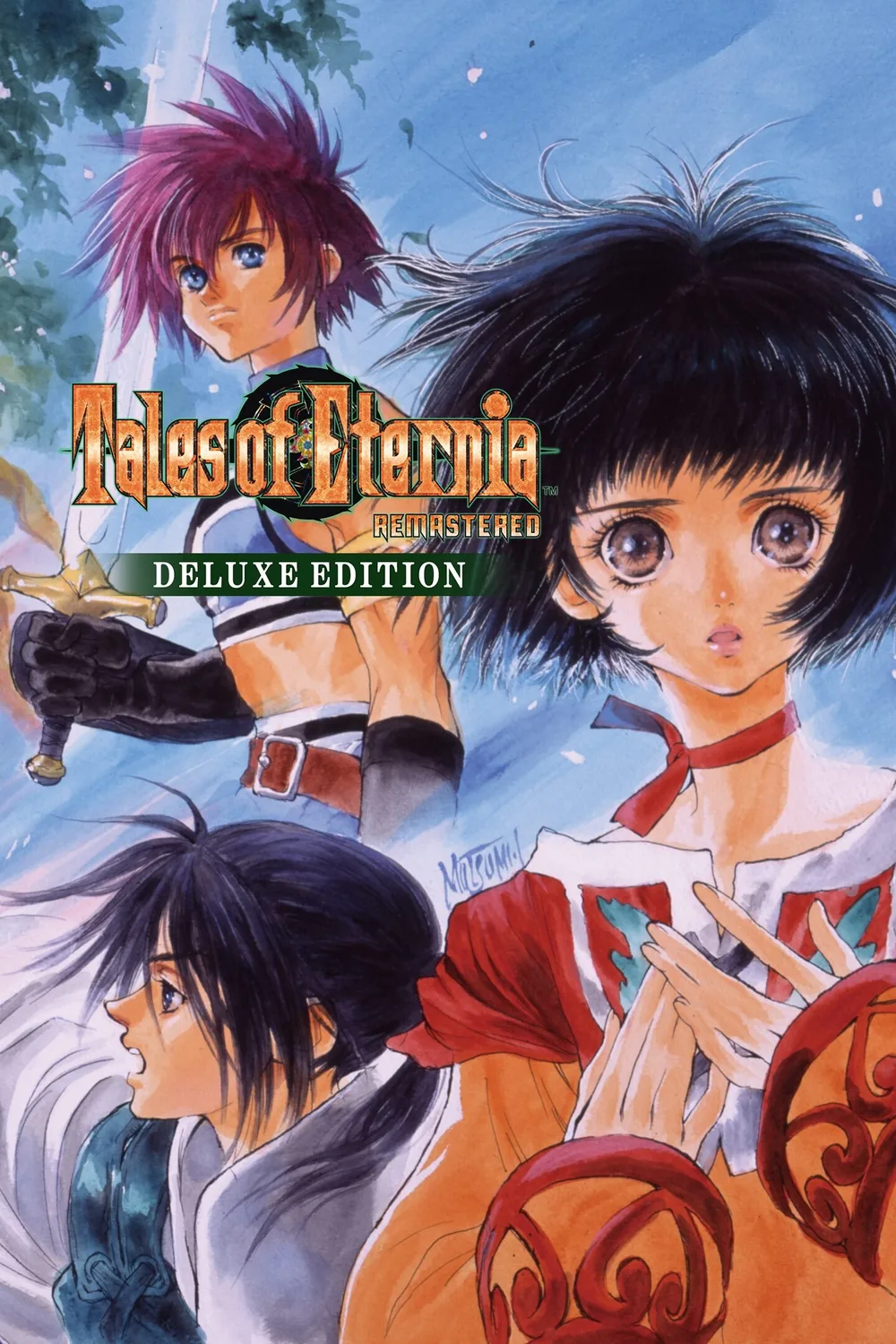
That cover is the point: one global name in 2026, while the North American "Tales of Destiny II" stays a 2001 curiosity.
- Reviewers including Shacknews, Nintendo Life and CGMagazine describe the remaster as based on the PlayStation Portable port, released in Japan and Europe only.
- The remaster is single-player on Steam, with no multiplayer category, matching that basis; the 2000 original supported up to four players locally, per Wikipedia.
That lineage is covered in the original vs remastered comparison.
| What you remember playing | Which release that was |
|---|---|
| A disc labelled Tales of Destiny II | The 2001 North American release of Tales of Eternia |
| A handheld copy named Eternia | The 2005 Japanese or 2006 European Eternia port |
| A Japanese PS2 game starring Kyle Dunamis | Tales of Destiny 2 (2002), never localised |
| A Remastered box on a current console | Tales of Eternia Remastered (October 2026) |
One More Name to Ignore: Tales of Eternia Online
A fourth name is worth knowing. Tales of Eternia Online was a separate massively multiplayer game set in the world of Eternia, released in Japan only on March 3, 2006, and active until March 31, 2007. Wikipedia lists it as the thirteenth main title in the series, and it is not a version of this game.
Where the Two Names Still Collide
Databases are where the merge becomes visible, because some file the 2000 game under both names at once. HowLongToBeat's entry is titled Tales of Eternia while its alias field reads Tales of Destiny II, and its summary text calls the game Tales of Destiny II outright. Its community-submitted averages, covering the original PlayStation and PSP releases rather than the remaster, are about 33 hours for the main story, 42 with extras and 74 for a completionist run, from 38, 63 and 10 submitted times. Community averages, not official figures; the how long to beat page tracks the remaster's own numbers.
The header image on this page is another trace: the cover of the Namco Official Guide Book for the 2000 release, catalogued by the Internet Archive as "Tales of Eternia Namco Official GuideBook", credited to Namco and dated November 30, 2000, and archived as a full scan. One Japanese product line, one American box, two English names.
FAQ
Is Tales of Destiny II the same game as Tales of Eternia? Yes. They are one PlayStation game. Tales of Eternia is the name used in Japan, later in Europe and now in the remaster, while Tales of Destiny II was Namco's title for the September 2001 North American release. Same characters, same story, same disc.
Is Tales of Destiny 2 a sequel to Tales of Eternia? No. It is the 2002 PlayStation 2 game and a direct sequel to 1997's Tales of Destiny, set eighteen years later with Kyle Dunamis as its lead. It and its 2007 handheld port have never been released in the West.
Why was Tales of Eternia renamed Tales of Destiny II in North America? For brand name and brand recognition, according to the developers: Tales of Destiny was the first Tales game North American players could buy, so the third game was titled as though it followed it. The popular Mattel trademark explanation is recorded as speculation, not the official reason.
If I played Tales of Destiny II on PlayStation, what did I actually play? The third mainline Tales game, the one this site covers, on a 2001 North American disc. Its leads are Reid, Farah, Keele and Meredy; footage showing Kyle is the other game.
Related Guides
- Tales of Eternia Original vs Remastered: What Changed - which build the 2026 release is based on.
- How Long to Beat Tales of Eternia Remastered? - the original release's community averages against the remaster's numbers.
- Tales of Eternia Remastered Beginner Guide and Tips - start here if you have never played the game under either name.
- Tales of Eternia Remastered Walkthrough: Full Guide - the route through Inferia and Celestia, the two worlds the PS2 sequel does not share.
More Tales of Eternia Remastered Guides
Cooking in Tales of Eternia Remastered: how the 36-recipe cookbook works, the Wonder Chef, the Chambard contest, and four official real-world dishes.
The Craymel Cage system explained: all ten Greater Craymels, the two-cage split between Keele and Meredy, opposing elements and summoning rules.
What the Deluxe Edition and all seven Remastered DLC packs contain, what each costs, and the two restrictions Bandai Namco buried in the fine print.
How the combat levels work in Tales of Eternia Remastered: what is selectable from hour one, what unlocks on a second playthrough, and where to change it.
Reid's Eternal Sword, Farah's Omni Weapon and the six-piece legendary set behind Legendary Arsenal, plus armour, accessories and Gald priorities.
The Glimmer Spire floor by floor, the solo Valkyrie fight on the top level, and how the remaster opens Nereid's Labyrinth on a first playthrough.
Optional and EX bosses in Tales of Eternia explained and separated: Sekundes, Wraith Horus and Valkyrie, where each one lives and what each rewards.
HowLongToBeat has no remaster times yet; the 2000 original averages 33 hours for the story, 42 with sides and 73.5 hours for full completion.